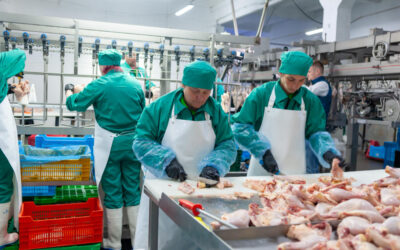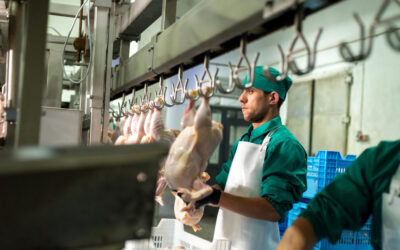
A catching crew that arrives short, late, or unprepared can disrupt far more than one shift. Poultry catching staffing affects live-haul schedules, processing plant receiving windows, bird handling, crew safety, and the production plan downstream. When the head count fails at the farm, overtime rises, trucks wait, supervisors scramble, and an already tight operation loses control of its schedule.
For poultry producers, contract growers, and processing operations, the answer is not simply finding more names on a roster. It is deploying a managed workforce that understands the pace, physical demands, safety rules, and accountability required in live-production environments.
Why poultry catching staffing is an operational issue
Catching is a critical handoff between the farm and the plant. It has to happen on schedule, with the right number of trained workers, under conditions that protect animal welfare and keep crews productive. A shortage of even a few people can slow loading rates and push live-haul activity outside the planned window.
That disruption does not stay at the farm. Late or inconsistent loads can affect plant scheduling, receiving capacity, labor assignments, and processing throughput. If management has to pull employees from other duties, authorize extended overtime, or rely on unsupervised last-minute labor, the cost of the staffing gap grows quickly.
The challenge is compounded by the nature of the work. Poultry catching demands reliable attendance during early, late, or changing hours. Workers must be prepared for repetitive physical activity, variable temperatures, dust, moisture, noise, and strict facility procedures. Traditional staffing approaches often treat this as a placement problem. It is a production-continuity problem.
A managed crew performs differently than a list of workers
A staffing provider can send individuals and leave the farm or plant team to handle orientation, attendance, supervision, replacement calls, payroll questions, and timekeeping exceptions. That model shifts risk back to the operation at the moment it needs support most.
A managed crew model assigns accountability where it belongs. The provider recruits for the work, confirms attendance, delivers safety orientation, supplies required personal protective equipment, coordinates on-site supervision, and monitors the crew throughout the assignment. The goal is simple: provide labor that can enter the workflow without creating a new management burden for the customer.
For catching operations, supervision matters. A crew lead can reinforce established loading practices, communicate schedule changes, address attendance issues before they become a head-count emergency, and maintain a direct line with the site contact. Supervisors are not a substitute for the operation’s own procedures. They help make sure the assigned crew follows them consistently.
This is particularly valuable when operations run multiple farms, rotate schedules, expand seasonal volume, or need support across a broad geography. A labor plan built for one stable location may not hold when weather, flock timing, transportation changes, or production demand shift the schedule with little notice.
What a dependable catching workforce requires
The right staffing plan begins with the real job conditions, not a generic job order. Before deployment, operations should define the needed head count, shift start time, location, expected duration, loading method, PPE requirements, safety rules, time-clock process, and primary on-site contact. Clear information allows the staffing partner to match the crew to the assignment and prepare people before arrival.
Crew size alone is not enough. The plan must account for attendance coverage. A team scheduled exactly to the minimum head count has no protection against callouts, transportation delays, or an employee who cannot perform the work safely. Depending on the operation and production window, a provider may need to maintain a replacement process or build coverage into the deployment plan.
Training must also be job-specific. General safety orientation is a starting point, but catching crews need direction on the facility’s access rules, sanitation practices, traffic patterns, emergency procedures, reporting expectations, and site-specific bird-handling requirements. When workers understand what is expected before the shift begins, supervisors spend less time correcting avoidable issues on the floor or in the house.
Finally, timekeeping cannot be an afterthought. Accurate time-clock integration or documented time approval protects payroll accuracy and gives managers a clear view of labor hours by crew, site, and shift. That visibility helps operations compare scheduled labor to actual labor use, identify recurring gaps, and control avoidable overtime.
Where staffing plans usually break down
Many poultry operations have worked around labor shortages for so long that the warning signs seem normal. Supervisors make repeated recruitment calls. Existing employees stretch shifts. Office staff chase missing time records. Production teams wait for workers to show up before deciding whether to adjust the plan.
Those workarounds are expensive, even when they appear to solve the immediate problem. They add overtime, reduce supervisory focus, increase fatigue, and create inconsistency from one shift to the next. They may also expose the operation to avoidable compliance concerns when worker classification, payroll, onboarding, or safety documentation are handled inconsistently.
The most common failure is waiting until a shortage becomes urgent before communicating the need. Emergency deployment is possible, but planning ahead provides better crew continuity and a stronger understanding of site expectations. If catching demand is seasonal or follows a predictable weekly pattern, the staffing plan should reflect that pattern before volume peaks.
Another breakdown occurs when a provider is measured only by fill rate. Filling an order matters, but it does not tell management whether the crew arrived prepared, remained fully manned, followed procedures, or supported the intended loading pace. Operational performance should be evaluated through attendance, readiness, safety, replacement response, timekeeping accuracy, and consistency across assignments.
Build a staffing plan around the production schedule
A practical poultry catching labor plan starts with a clear operating rhythm. Share expected locations, recurring start times, volume changes, seasonal ramps, and known risk periods with the staffing partner. That information gives recruiting and supervision teams time to prepare instead of react.
Next, establish one point of contact for schedule confirmation and one escalation path for changes. Catching schedules can move. The issue is not whether change happens, but whether the updated information reaches the crew quickly enough to protect attendance and transportation. A disciplined communication process prevents a schedule adjustment from becoming a missed shift.
Operations should also decide which responsibilities remain on-site and which are handled by the staffing provider. The customer should retain control of production standards, animal-welfare expectations, and facility-specific direction. The provider should own recruiting, payroll, attendance follow-up, workforce supervision, safety orientation, PPE coordination, and replacement management. Clear ownership eliminates the gray areas where problems tend to sit unresolved.
For multistate or multi-location operations, consistency is especially important. The staffing partner should be able to work within each site’s procedures while maintaining reliable payroll, compliance, communication, and reporting practices across the broader operation. Local conditions may vary, but workforce accountability should not.
Measure the results that protect uptime
Labor costs should be evaluated in context. A lower hourly bill rate is not a savings if it produces missed starts, excessive supervisor intervention, turnover, or delayed loads. The more useful question is whether the workforce model protects output at a predictable total cost.
Track crew arrival and fill rates, unplanned overtime, replacement response time, attendance trends, safety incidents, and the number of hours internal leaders spend solving labor problems. These measures show whether staffing support is reducing operational friction or merely moving it to another part of the business.
Enterprise Staffing approaches poultry labor as a managed production resource, not a stack of resumes. With recruiting, safety support, PPE coordination, on-site oversight, payroll support, and time-clock integration handled through one accountable workforce partner, operations can focus on running the schedule instead of rebuilding the crew before every shift.
When the next catching schedule is at risk, start with the actual head-count gap, site requirements, and production window. A disciplined staffing plan built around those details gives your operation a better chance to keep crews ready, trucks moving, and every downstream line running at full speed.