Plant leaders need safety controls that work at line speed. That means clear procedures, trained and supervised crews, the right personal protective equipment, and fast correction when conditions change. The goal is straightforward: protect people while keeping every line running at full speed.
Start the Food Plant Safety Guide at the Line
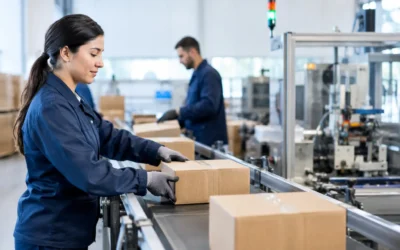
The plant floor is where safety plans either perform or fail. Written policies are necessary, but they do not replace direct observation, shift-start communication, and accountable supervision. Every department has different exposure points. Receiving crews deal with powered industrial trucks and dock traffic. Processing teams face blades, pinch points, cold environments, chemicals, and repetitive-motion demands. Packaging and palletizing teams work around conveyors, stretch wrappers, lifting tasks, and fast-moving equipment.
A practical safety program begins by identifying the hazards tied to each job, not by handing every worker the same generic orientation. Break the operation down by task, equipment, work area, shift, and product flow. Then verify that the controls match what employees actually do.
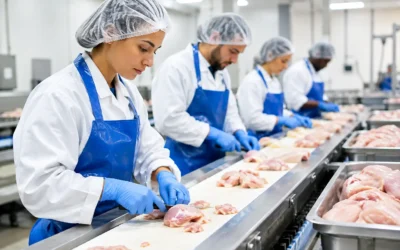
For example, a worker assigned to deboning needs more than a general warning about sharp tools. They need cut-resistant PPE sized correctly, a demonstration of safe knife handling, clear instructions for tool storage and cleaning, and a supervisor who can spot unsafe technique before an injury occurs. A new palletizer needs defined travel lanes, lifting expectations, equipment boundaries, and a clear process for reporting a damaged pallet or blocked aisle.
The difference is operational. Specific training reduces guesswork. Less guesswork means fewer incidents, fewer slowdowns, and less pressure on already strained crews.
Build Safety Into Staffing and Onboarding
Food plants often face seasonal spikes, attendance gaps, turnover, and sudden customer demand. Filling head count quickly matters, but placing unprepared workers into high-risk areas creates a larger problem than the labor gap itself.
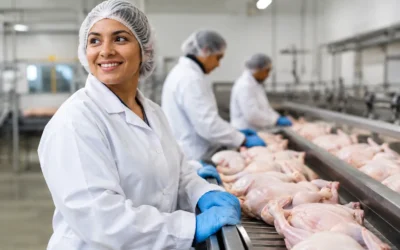
Every incoming employee should receive site-specific orientation before entering production. That orientation should cover plant traffic patterns, emergency exits, reporting procedures, PPE requirements, hygiene rules, restricted areas, machine hazards, and the supervisor to contact when something is wrong. In food environments, it must also address practices that protect the product, including handwashing, illness reporting, allergen controls where applicable, and procedures for preventing foreign-material contamination.
Orientation is only the first checkpoint. New workers need close oversight during their first shifts, especially when assigned to knife work, machinery, chemical handling, forklift-adjacent tasks, or sanitation. A fast placement model can still be disciplined. The key is sending crews with defined work instructions, on-site direction, and a supervisor who owns both attendance and safe execution.
Managed staffing is especially valuable when internal supervisors are already focused on output, quality checks, maintenance coordination, and shipping deadlines. A properly supervised crew does not arrive as a group of names on a roster. It arrives ready to follow the plant’s safety rules, time-clock process, production schedule, and chain of command.
Control the Hazards That Stop Production
The highest-risk conditions in a food plant are usually familiar. The issue is not whether leaders know they exist. The issue is whether controls remain consistent when volume rises, staffing changes, or equipment falls behind schedule.
Machine Guarding and Lockout/Tagout
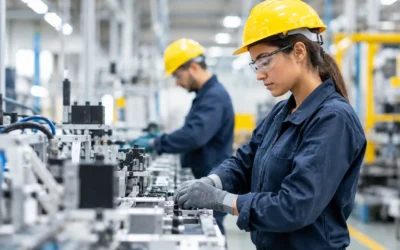
Conveyors, mixers, grinders, slicers, saws, packaging equipment, and automated palletizing systems can create severe injury risk in seconds. Guards must be in place and functional before startup. Bypassed interlocks, makeshift repairs, and employees reaching into moving equipment are warning signs that require immediate action.
Lockout/tagout procedures must be job-specific and understood by authorized employees. Maintenance, jam clearing, blade changes, cleaning, and troubleshooting are common moments when production urgency can push workers toward unsafe shortcuts. The line can wait. An injury investigation, equipment damage, or OSHA exposure will cost far more than a controlled stoppage.
Slips, Trips, and Cold or Wet Work Areas
Water, fats, food debris, condensation, and cleaning chemicals make slips a constant risk. Floors should be inspected throughout the shift, not only after an incident. Drainage, mats, footwear, hose management, lighting, and rapid cleanup all matter.
Cold rooms add another layer. Workers may lose dexterity, rush tasks to get warm, or wear bulky gear that affects movement. Rotate employees when conditions warrant it, confirm that PPE fits over required clothing, and keep walkways clear. A cold-storage injury can happen as easily during a hurried turn with a loaded cart as during a direct equipment task.
Chemical and Sanitation Controls
Sanitation supports food safety, but chemical exposure can put workers at risk when dilution, labeling, storage, or PPE requirements break down. Employees need to know which chemicals they are using, where safety data is available, how to respond to splashes or spills, and which products must never be mixed.
Sanitation crews should not be treated as an afterthought because they work outside peak production hours. Their work often involves wet floors, confined spaces, energized equipment, pressurized systems, and concentrated chemicals. Give sanitation the same level of hazard review, supervision, and staffing discipline as production.
Ergonomics and Repetitive Tasks
A line can meet its hourly number while quietly building a recordable injury problem. Reaching, lifting, twisting, forceful gripping, and repetitive motions can lead to strains that increase absenteeism and turnover over time.
Watch for jobs where workers consistently modify their posture, slow down late in the shift, or rely on improvised lifting methods. Adjust table height, product presentation, rotation schedules, lift-assist options, and staffing levels where possible. Rotation is useful only when workers are actually moving between tasks with different physical demands. Rotating from one high-force repetitive task to another does not solve the exposure.
Make Reporting Fast, Simple, and Expected
Near misses are production intelligence. A damaged guard, a recurring jam, a loose floor mat, or a worker nearly struck by forklift traffic should be reported before it becomes an injury or shutdown.
Employees will not report hazards consistently if they expect blame, delay, or no response. Supervisors set the standard. When a concern is raised, acknowledge it, control the immediate risk, document the issue, and communicate what changed. That response teaches the crew whether reporting is real or just a poster on the breakroom wall.
Keep reporting channels simple. Workers should know exactly who to tell on each shift and what to do if the immediate supervisor is unavailable. For multilingual crews, use clear visuals, demonstrations, and translated materials where needed. Safety communication fails when people can repeat a rule but cannot apply it under pressure.
Use Daily Verification, Not Annual Assumptions
Safety performance changes with the operation. New equipment, new products, overtime, labor turnover, maintenance delays, and changing production targets can all create new exposures. A once-a-year review will not catch what changed on Tuesday night.
Use shift-start checks to confirm PPE availability, floor conditions, guards, emergency access, staffing assignments, and known equipment issues. Supervisors should spend time where the work happens, observing actual practices rather than relying only on completed checklists. Checklists are valuable evidence, but observation reveals whether procedures are being followed when nobody is watching.
Track leading indicators alongside incident rates. Near misses, PPE shortages, repeat housekeeping issues, training completion, corrective-action closure time, and equipment-related stops can show where risk is building. The most useful metrics help leaders act before a worker gets hurt or a customer order is delayed.
Keep Accountability Close to the Work
A food plant safety guide succeeds when ownership is visible at every level. Plant leadership must provide resources and enforce standards. Supervisors must correct unsafe conditions in real time. Employees must stop and report hazards. Staffing partners must ensure incoming crews are oriented, equipped, and managed to the facility’s expectations.
That shared accountability is what turns safety from a compliance requirement into a production advantage. Enterprise Staffing helps food and poultry operations deploy supervised, OSHA-compliant crews that can integrate into established safety rules and production workflows quickly. The right labor partner should reduce the burden on plant leadership, not add another group that requires constant oversight.
When the next head-count gap hits, do not separate the staffing decision from the safety decision. Put trained people in the right jobs, give supervisors authority to act, and fix the conditions that force crews to choose between speed and safe work. That is how a plant protects its people and keeps output moving shift after shift.