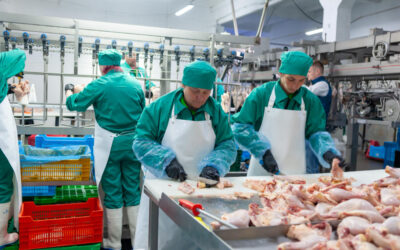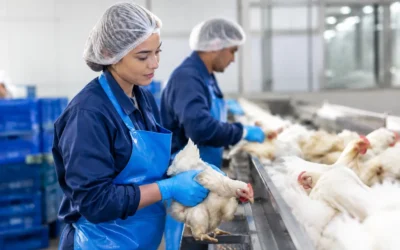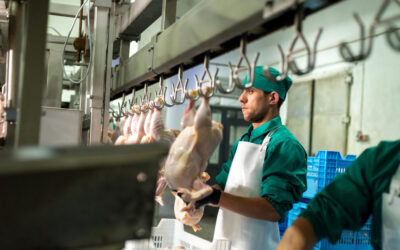
A 12-person gap on a packaging line does not stay a 12-person problem. It slows changeovers, forces experienced employees into overtime, strains quality checks, and puts shipment schedules at risk. Food processing staffing has to do more than fill open positions. It has to protect throughput when attendance drops, orders spike, or a seasonal ramp begins faster than the internal hiring process can respond.
For plant leaders, the real question is not whether labor is available somewhere in the market. It is whether a crew can arrive ready to follow site rules, wear the right PPE, clock in correctly, and perform the work required to keep every line running at full speed.
Food Processing Staffing Is a Production Decision
Food plants operate on schedules that leave little room for labor uncertainty. Raw materials arrive, sanitation windows close, production orders are set, and trucks have departure times. When the workforce is short, the plant cannot simply pause without creating downstream cost.
That is why staffing decisions should be made with the same discipline used for equipment uptime and raw-material planning. A labor partner must understand where a missing crew member creates the greatest operational exposure. On one shift, the priority may be deboning or evisceration. On another, it may be tray packing, labeling, palletizing, freezer loading, or sanitation support.
Sending individual workers without structure may solve a head-count problem on paper, but it can leave supervisors carrying the full burden of orientation, attendance follow-up, job assignment, and replacement. A managed-crew model shifts more of that workload off the plant floor. The staffing provider recruits, orients, equips, and supervises workers while the facility maintains control over production standards and daily output priorities.
The trade-off is straightforward. A low-touch provider can appear less expensive at the hourly bill rate, but that number does not capture supervisor time, preventable absenteeism, overtime, turnover, or the cost of a line that runs below target. The right model depends on the facility’s internal management capacity. Plants already stretched thin usually need more than names on a roster.
Build the Food Processing Staffing Plan Around the Line
An effective staffing plan starts with the work, not a generic job title. “Production worker” is too broad to forecast accurately. A plant needs to define the tasks, pace, schedule, physical requirements, food-safety expectations, and cross-training potential for each area that needs support.
Start with the true head-count gap
Operations leaders should identify the number of people required by shift, department, and line position, then separate baseline needs from surge needs. A poultry operation may require a stable daily crew for processing while needing additional people during a high-volume period. A prepared-food facility may need more pack-out labor before holiday distribution windows. Those are different staffing problems and should be priced, recruited, and supervised differently.
A useful plan also accounts for the positions that cannot be left uncovered. Some roles are easier to flex across departments. Others require a worker who has already learned the pace, ergonomics, equipment boundaries, and quality expectations of a specific station. Treat those critical positions as continuity roles, not interchangeable labor slots.
Match deployment to the operating schedule
The best time to address a labor gap is before the line is short. In reality, many plants call when attendance has already dropped or a new order has changed the production plan. A staffing partner should be able to translate that urgent request into a workable deployment plan quickly, including shift start times, facility access, transportation considerations, time-clock procedures, PPE, and a clear on-site point of contact.
Rapid deployment matters, but speed without preparation creates avoidable risk. Workers need a site-specific safety orientation and a direct understanding of their assignment before they enter a high-output environment. They also need reliable on-site direction after the first day, when the most common attendance and performance issues begin to surface.
Put attendance ownership where it belongs
Food processing plants should not have to spend every shift chasing no-shows. The staffing provider should maintain communication with the crew, monitor attendance, address recurring issues, and move quickly on replacements when needed. That accountability is what turns a contract labor arrangement into workforce coverage.
For Enterprise Staffing, this means deploying managed crews that integrate into established schedules and production workflows, rather than leaving plant supervisors to manage a rotating group of unfamiliar workers on their own.
Safety and Compliance Cannot Be an Afterthought
A fast staffing response is only useful if it supports a safe, compliant operation. Food processing creates a demanding mix of hazards: wet floors, repetitive motion, sharp tools, powered equipment, cold storage, chemical exposure, forklift traffic, and strict sanitation requirements. Workers who do not understand the environment can create risk for themselves, their coworkers, and the product.
A disciplined staffing program establishes expectations before the shift begins. That includes PPE requirements, safe work practices, reporting procedures, prohibited areas, emergency protocols, and the facility’s rules for hygiene and food handling. The orientation should be tailored to the job. A worker assigned to palletizing does not face the same exposures as someone working near cutting equipment or in a refrigerated room.
Compliance also extends beyond the floor. Payroll administration, employment documentation, workers’ compensation coverage, wage-and-hour practices, and accurate time records all affect the plant’s labor exposure. Time-clock integration is especially valuable because it gives both the operation and the staffing partner a shared record of hours, exceptions, and shift coverage.
No staffing model removes every risk. The facility still owns its workplace conditions, training requirements, and production controls. But a provider that brings safety orientation, workforce oversight, and compliance support can reduce the number of labor issues that land on HR and operations leaders at the worst possible moment.
Measure Staffing by Output, Not Just Fill Rate
A filled requisition is not the finish line. The labor program should be evaluated by whether it improves the operation. If a crew arrives but production supervisors spend half the shift retraining, reassigning, and covering absences, the plant has not gained meaningful capacity.
Track the measures that show whether staffing is supporting production: daily attendance, replacement speed, overtime hours, turnover, line attainment, units packed per labor hour, safety incidents, and supervisor time spent on workforce administration. Not every plant needs a complex dashboard, but every plant needs visibility into whether labor costs are producing stable output.
It also helps to review performance by department. A crew may be highly effective in packing and palletizing while a different approach is needed for cold-storage work or detailed assembly. That is not a failure of the program. It is a reason to adjust recruiting profiles, orientation, crew size, or on-site supervision based on the work itself.
Choose a Partner That Can Carry Operational Weight
The right staffing provider should ask direct questions about your production plan, not just your hourly rate. How many people are needed by shift? Which stations are critical? What happens when attendance falls below plan? Who handles orientation? Who supplies PPE? How are hours captured? Who is accountable when a worker does not return tomorrow?
Clear answers separate managed workforce support from basic temporary placement. Look for a partner that can recruit for the environment, provide on-site oversight, communicate quickly with plant leadership, and scale when demand changes. Local market knowledge matters, particularly in labor-tight areas across the Southeast, but multistate reach can be equally important for companies operating several facilities or responding to regional demand.
Keep the conversation centered on operational consequences. The best staffing arrangement is not the one that promises the most candidates. It is the one that helps your facility hold the schedule, control overtime, maintain safety discipline, and keep production moving when labor conditions become unpredictable.
When the next head-count gap appears, treat it as a production risk with a staffing plan attached. A prepared, supervised crew gives your managers room to lead the floor instead of spending the shift trying to rebuild it.