A short-handed line does not wait for a requisition to move through the approval cycle. When attendance drops in deboning, packaging, palletizing, pick-pack, or assembly, supervisors must either slow output, extend overtime, or pull experienced employees away from critical work. That is the real decision behind inhouse recruiters versus crew providers: which model keeps the operation fully manned when labor pressure hits?
An internal recruiting function can be the right long-term investment for steady hiring needs and permanent roles. A managed crew provider solves a different operational problem. It supplies a ready workforce, supervision, safety structure, payroll support, and ongoing accountability so production can continue without placing every labor task on plant leadership.
Inhouse Recruiters Versus Crew Providers: The Core Difference
Inhouse recruiters are built to find, screen, and hire employees for the company. Their work often includes posting jobs, managing applicants, coordinating interviews, processing offers, and supporting onboarding. When the goal is to build a permanent workforce over time, that control has value.
But recruiting is only one part of keeping a production floor staffed. A recruiter may fill an opening, yet the operation still must manage attendance, replacements, payroll, timekeeping, safety orientation, PPE, coaching, transportation issues, and daily crew performance. In high-turnover environments, that workload can become a constant drain on HR and front-line supervisors.
A crew provider operates closer to the production floor. Rather than delivering individual candidates and stepping away, the provider deploys a managed group of workers aligned to the shift, work area, safety requirements, and production target. The provider remains accountable for recruiting, workforce oversight, backfill coverage, and the employment administration behind the crew.
That distinction matters most when labor is directly tied to throughput. A warehouse cannot make its shipping cutoff with empty pick lanes. A food processing facility cannot recover lost yield from an understaffed shift simply by hiring more effectively next month. The labor model must protect the schedule now.
What Internal Recruiting Does Well
An inhouse recruiting team is a strong fit when hiring volume is predictable, the company needs highly specialized full-time employees, and leaders have time to manage a longer hiring cycle. Internal recruiters understand the company culture, can build talent pipelines, and can create a consistent candidate experience for direct-hire roles.
This approach can also give leadership full control over hiring standards and employment decisions. For key maintenance technicians, quality leaders, supervisors, engineers, and other roles where company-specific knowledge compounds over years, direct recruiting is often the sensible path.
The trade-off is capacity. Internal recruiting teams can only process so many openings, applicants, interviews, orientations, and new-hire issues at once. When a seasonal spike, unexpected absenteeism pattern, customer ramp-up, or turnover wave creates a large head-count gap, the recruiting function may become a bottleneck through no fault of its own.
Even after positions are filled, plant management still owns the daily labor outcome. If workers do not report, need retraining, fail to meet pace, or cannot work safely in the assigned area, the operational team must respond. Hiring control does not automatically create shift-level coverage.
What a Managed Crew Provider Takes Off Your Plate
A crew provider is designed for operations that need labor capacity and workforce management at the same time. The best model begins with the work itself: required head count, shift start, production area, expected pace, safety exposures, PPE, time-clock process, and the skills needed to perform the task correctly.
From there, the provider recruits and places workers as a coordinated crew. On-site supervision keeps communication moving between the operation and the workforce. Attendance is tracked. Replacements are handled when gaps emerge. New workers receive orientation before entering the workflow, not after they have already delayed a line.
For many employers, the real value is not simply faster access to workers. It is fewer operational handoffs. Instead of asking HR to recruit, payroll to process hours, supervisors to chase attendance, and EHS staff to repeat basic orientation, leaders have one accountable workforce partner managing the crew around the production plan.
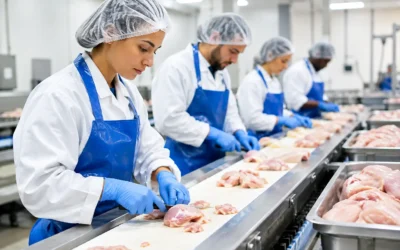
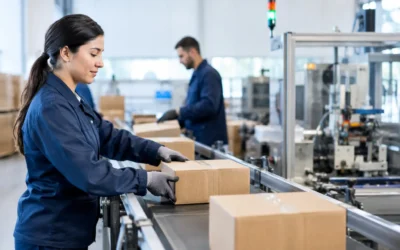
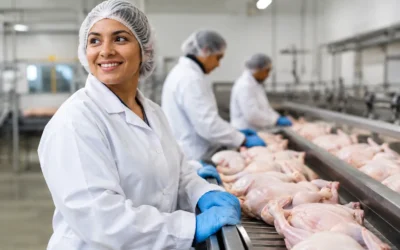
This can be especially effective in poultry processing, hatcheries, food production, agribusiness, distribution, manufacturing, and packaging environments. These operations often require dependable coverage across repetitive, physically demanding jobs where turnover, attendance, sanitation, safety, and schedule discipline all affect output.
Compare the Models Where Production Feels the Pressure
The right choice becomes clearer when operations leaders compare the models against the issues that affect the shift.
Speed to coverage
An internal recruiting team typically needs time to advertise, source candidates, interview, complete hiring paperwork, and schedule orientation. That is appropriate for planned, permanent hiring. It is less effective when tomorrow’s second shift is 25 people short.
A crew provider should be prepared to assess the gap quickly and deploy workers into established processes, often within 48 hours. Speed only matters if the deployment is organized. A rushed group without clear supervision, safety rules, or timekeeping instructions can create more disruption than relief.
Daily accountability
With direct hires, supervisors and HR retain primary responsibility for attendance follow-up, performance conversations, coaching, and replacement hiring. That may work well in a stable department with strong front-line leadership.
With managed crews, the provider carries a defined level of workforce accountability. The plant still controls production standards, job assignments, and site rules. The provider manages the people side of keeping that crew present, prepared, and responsive to the schedule.
Cost visibility
Internal recruiting costs are often spread across salaries, job boards, background checks, onboarding time, payroll administration, benefits, workers’ compensation, overtime, and the lost production created by vacancies. Those costs can be hard to see in one place.
A payroll-inclusive crew model creates a more predictable labor rate. It does not mean labor is automatically cheaper in every circumstance. It means leaders can evaluate labor cost against output, overtime avoidance, reduced HR burden, and fewer disruptions on the floor. That is a better comparison than measuring only an hourly bill rate.
Compliance and safety discipline
Labor-intensive operations carry real exposure. Workers need site-specific orientation, appropriate PPE, clear reporting lines, documented hours, and consistent adherence to OSHA requirements. Internal teams can manage these responsibilities, but they need enough bandwidth and disciplined processes to do so at scale.
A qualified crew provider brings those responsibilities into the service model. Ask how safety orientation is delivered, who confirms PPE use, how injuries are reported, how time-clock integration works, and who maintains the required employment and payroll records. Zero compliance anxiety comes from documented processes and clear ownership, not from assumptions.
When a Hybrid Approach Makes Sense
This is not always an either-or choice. Many high-output employers use internal recruiters for permanent positions while relying on a crew provider for variable production labor. The internal team protects the long-term talent strategy. The managed crew absorbs short-term volatility and recurring workforce pressure.
A hybrid model is particularly useful when demand rises and falls by season, customer orders change quickly, or certain departments experience higher turnover than others. A facility may maintain its core team in maintenance, quality, shipping leadership, and skilled machine operations while using supervised crews for packaging, sorting, kitting, palletizing, sanitation support, or general warehouse labor.
The key is defining ownership before a shortage happens. Decide which roles stay internal, what head-count threshold triggers outside support, who communicates daily production changes, and how worker performance will be measured. A labor plan is more effective when it is built before the line is under pressure.
Questions to Ask Before Choosing a Crew Provider
Not every staffing company is equipped to support a production-critical environment. If a provider simply sends names to a gate and leaves supervisors to solve the rest, it may not relieve the operational burden at all.
Ask whether the provider supplies on-site supervision, handles safety orientation and PPE, supports payroll and workers’ compensation administration, and can integrate with your time-clock process. Confirm how it responds to absenteeism, what replacement expectations look like, and whether it understands the actual tasks on your floor, from evisceration and deboning to pick-pack and palletizing.
Also ask how performance is communicated. The strongest providers do not treat head count as the only metric. They speak in terms of attendance, readiness, safety, fill rate, shift stability, overtime reduction, and the ability to keep every line running at full speed.
Choose the Model That Protects the Shift
Inhouse recruiters are valuable when the mission is building a permanent workforce with deliberate hiring control. Crew providers are valuable when the mission is maintaining output through labor volatility without expanding the administrative load on HR and plant leadership.
The deciding question is simple: when the next head-count gap appears, who owns the work required to keep the shift fully manned? Choose the model that gives your supervisors coverage, your workforce clear direction, and your operation the confidence to run the schedule it promised.