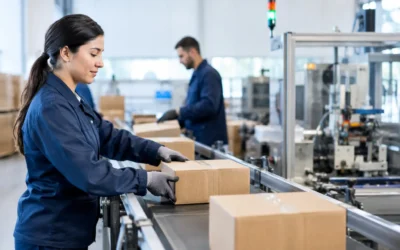
A missing pair of cut-resistant gloves can slow a line before the first pallet moves. The same is true when new workers arrive without safety glasses, hearing protection, hair restraints, or the footwear required for the job. So, can staffing vendors supply PPE? Yes, many can – but the real question is whether the vendor has a controlled PPE process that supports your safety program, production requirements, and compliance responsibilities.
For high-output operations, PPE is not a minor onboarding detail. It is part of whether a crew can report, clock in, and work safely from the first shift. A staffing partner that supplies the right equipment, sizes workers correctly, tracks replacements, and reinforces use on the floor can reduce startup friction and help keep every line running at full speed.
Can Staffing Vendors Supply PPE and Stay Compliant?
A qualified staffing vendor can purchase, issue, and manage PPE for assigned workers. In many managed-crew arrangements, that is the most practical model. The vendor can include standard equipment in its service plan, distribute it during orientation, and make sure employees report to the floor prepared for their assigned tasks.
That does not mean the client facility is removed from the safety process. OSHA responsibilities depend on the work performed, the worksite conditions, and who controls the hazards. A staffing vendor should not make broad promises that PPE alone eliminates the customer’s obligations. The host employer still needs to communicate job hazards, site rules, required equipment, machine-specific procedures, restricted areas, and changes in production conditions.
The strongest arrangement is shared and documented. The staffing provider manages its employees, orientation, PPE issuance, supervision, and follow-up. The facility provides accurate job descriptions, hazard information, and access to the areas where crews will work. Both parties address gaps immediately rather than assuming the other side owns the problem.
For example, a warehouse pick-pack crew may need high-visibility vests, safety-toe footwear, gloves, and eye protection based on the tasks and traffic pattern. A poultry deboning crew may require different gloves, arm guards, aprons, hair restraints, hearing protection, and sanitation controls. There is no one-size-fits-all PPE package for industrial staffing.
What PPE Should a Staffing Vendor Provide?
The answer depends on the assignment. A capable vendor starts with the job, not a generic supply box. It should identify the essential protective equipment before workers are deployed and confirm who supplies specialized items tied to a specific machine, chemical, food-safety process, or customer requirement.
Standard PPE a staffing provider may supply includes safety glasses, gloves, high-visibility vests, hearing protection, hard hats, disposable protective wear, hair and beard restraints, and basic task-appropriate footwear policies. For food processing, agribusiness, cold environments, or sanitation-heavy work, the vendor may also manage items such as smocks, sleeves, waterproof gear, thermal protection, and other required protective apparel.
Specialized PPE often requires closer coordination. Respirators, fall-protection systems, chemical-resistant equipment, arc-rated clothing, and highly specific cut-protection requirements cannot be treated as routine issue items. These assignments may require hazard assessments, fit testing, medical evaluations, equipment inspections, detailed training, and written procedures. If the job requires specialized protection, the staffing vendor and host employer need a clear agreement before the crew arrives.
The practical test is simple: can the worker perform the assigned task safely at the start of the shift, with the exact protection required by the work area? If not, the deployment is not ready.
PPE Supply Is Only One Part of Readiness
Buying PPE is easy. Managing it across changing head counts, multiple shifts, turnover, and high-volume production is where staffing programs break down.
A vendor may supply safety glasses at orientation, but what happens when they are damaged on a Saturday shift? Who replaces gloves after a worker moves from packaging to palletizing? Who confirms that temporary workers entering a cold-storage area have protection appropriate to the temperature and task? When the answer is unclear, supervisors lose time chasing equipment instead of managing output.
A managed staffing partner should have a defined process for issuance, replacement, and accountability. That process should connect PPE to worker orientation and daily floor supervision. It should also account for sizing and fit. Equipment that is uncomfortable, incorrectly sized, or unavailable at the point of need is more likely to be ignored, mishandled, or become a source of injury exposure.
At Enterprise Staffing, PPE is treated as part of crew deployment, not an afterthought after workers reach the facility. That approach helps operations avoid the familiar first-day scramble: workers waiting at the gate, supervisors searching for basic gear, and production teams covering a labor gap with overtime.
Questions to Ask Before You Accept Vendor-Supplied PPE
Before assigning a staffing vendor to a production area, operations and HR leaders should establish the details in writing. The conversation should cover more than whether the vendor provides gloves or vests.
Ask how the vendor determines PPE requirements for each job classification. Confirm how it receives updates when your facility changes equipment, materials, chemicals, line speeds, or work methods. Request clarity on who pays for standard equipment, who supplies specialized equipment, and how replacements are handled during every shift.
You should also ask how PPE use is reinforced after orientation. A one-time safety briefing is not enough for fast-moving work environments. Workers need visible supervision, correction when equipment is not being used properly, and a clear path to report damaged or missing gear without leaving their station unsupported.
Documentation matters as well. The vendor should be able to verify that workers received required orientation and equipment. Your facility should maintain its own records for site-specific training, hazard communication, and any specialized safety requirements. Clear records help both organizations respond quickly when an incident, audit, or customer inquiry occurs.
Where Responsibility Can Become Unclear
The biggest risk is not usually a vendor refusing to supply PPE. It is a vague division of responsibility.
Consider a worker assigned to a packaging line who is issued standard safety glasses and gloves by the staffing provider. Mid-shift, that worker is moved to a task involving chemical sanitation. The original PPE may no longer be sufficient. If neither the floor supervisor nor the staffing lead communicates the task change, the worker may be exposed to a hazard that was not part of the original assignment.
This is why job changes, cross-training, and emergency reassignments need the same discipline as initial placement. The host employer controls the work environment and task assignment. The staffing partner controls employee readiness and workforce oversight. When either side changes the work without communication, safety and compliance risk rises fast.
The solution is operational, not theoretical: establish escalation points. Supervisors should know whom to contact before moving contingent workers into a new process, and the staffing partner should have an on-site or readily available lead who can respond. That keeps production moving without asking workers to make safety decisions on their own.
PPE Can Support Lower Downtime and Better Labor Control
For plant and warehouse leaders, vendor-supplied PPE should be evaluated as part of the total labor model. A lower hourly bill rate can lose its value quickly if your internal team must purchase supplies, conduct repeated orientations, manage replacement gear, and resolve avoidable safety issues across every shift.
A bundled workforce model can reduce those handoffs. When recruiting, orientation, PPE, supervision, payroll, and time-clock coordination are managed together, workers arrive better prepared and internal leaders spend less time administering basic workforce needs. The benefit is not simply convenience. It is fewer barriers between a confirmed head count and productive labor on the floor.
There are trade-offs. Some facilities prefer to control all PPE inventory centrally, especially when equipment is highly specialized or tied to strict customer specifications. Others want the staffing partner to manage standard gear while the facility retains ownership of specialized protection. Both models can work when responsibilities are clear and equipment is available before work begins.
The right question is not whether a staffing vendor can hand out PPE. It is whether that vendor can make PPE management part of a disciplined deployment plan – one that keeps crews fully manned, workers protected, and production moving when demand does not wait.