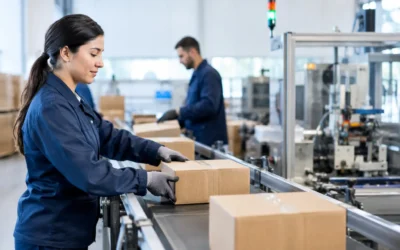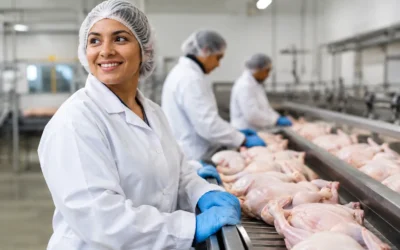
A hatchery can have eggs ready, equipment running, and delivery schedules locked in, then lose throughput because a few critical stations are short. Feather chick sexing staffing addresses that pressure point with trained, accountable labor built around speed, handling discipline, and accurate workflow execution. When chick volume moves fast, a staffing gap is not an HR problem waiting for next week. It is a production risk happening on the floor.
For operations using sex-linked genetics, feather sexing is a fast visual method for separating chicks based on primary and covert feather development. The method may be straightforward in principle, but it demands consistent handling, clear station standards, and workers who can maintain pace without creating errors or compromising animal welfare. Staffing has to match the production reality, not just fill a head-count number.
What Feather Chick Sexing Staffing Must Cover
A feather sexing station does not operate independently. It sits within a tightly timed hatchery process that may include chick pull, vaccination, sorting, counting, boxing, sanitation, and loading. If sexing capacity falls behind, chicks can accumulate upstream, box-out schedules tighten, and supervisors are forced to pull experienced team members from other essential tasks.
The right labor plan starts by separating specialized work from support work. Qualified feather sexers need to understand the hatchery’s approved sexing criteria for each applicable cross, how to handle chicks correctly, and when to escalate uncertainty. They should not be expected to learn the process at full production speed on a high-volume day.
At the same time, many surrounding positions can be staffed to protect the sexing team’s pace. Line support may include tray handling, chick movement, count verification, box assembly, sanitation support, staging, palletizing, and loading. When those roles are covered, specialized workers stay at the station where their accuracy has the highest operational value.
Feather-based identification is not appropriate for every breed or genetic program. Some operations use vent sexing, genetic markers, automated systems, or a combination of methods. A practical staffing partner confirms the hatchery’s actual process before deploying labor. The goal is not to force a generic crew model onto the floor. It is to provide people who can work safely within the established production method.
Why Hatchery Labor Gaps Become Production Gaps
Hatcheries run on timing. A late start, an absent shift, or a bottleneck at one table can create downstream pressure quickly. Overtime may keep the shift moving for a day, but relying on the same core employees to cover repeated gaps increases fatigue, turnover, and the likelihood of handling or count errors.
Seasonality adds another layer. Demand can rise around placement schedules, customer commitments, holiday timing, or regional production cycles. A hatchery may need more labor for only a defined period, yet that period may be the one time internal recruiting cannot move fast enough. By the time individual applicants are screened, hired, and oriented, the volume surge may already be underway.
Absenteeism is equally disruptive because specialized operations do not have unlimited bench strength. Pulling a supervisor onto a sexing line may solve an immediate problem, but it removes the person responsible for quality checks, crew coordination, and production control. A managed staffing model protects those leadership roles by putting supervised support where the operation needs it most.
Build the Crew Around Station Demand
The most reliable feather chick sexing staffing plan is based on station demand, not a broad request for extra hands. Start with expected hatch volume by shift and the production rate required at each sexing station. Then account for break coverage, sanitation intervals, rework, box-out requirements, and the time needed to move completed chicks to the next step.
This is where operations leaders should be direct about the gap. A request for 10 workers means very little without context. A better request identifies the number of sexing stations, the expected chicks per hour, required start and end times, experience level needed, PPE requirements, and which adjacent tasks are pulling trained personnel away from the line.
A staffing plan should also distinguish between baseline coverage and surge coverage. Baseline coverage protects the normal schedule. Surge coverage gives the hatchery a controlled response when volume rises, attendance drops, or a customer order changes. That distinction prevents managers from staffing every day as if it were an emergency while still keeping contingency labor within reach.
For many hatcheries, the best answer is a blended crew. Experienced workers cover sensitive tasks and lead the production rhythm. Cross-trained support workers handle staging, material flow, boxing, and other defined assignments that keep the line clear. This approach can reduce the pressure to place unprepared workers into a precision station simply because the shift is short.
Supervision Matters as Much as Head Count
Sending workers to a hatchery without clear on-site oversight transfers the daily management burden back to the plant. The supervisor still has to explain expectations, chase attendance, correct unsafe behavior, reconcile hours, and solve performance issues while trying to keep production moving. That is not labor relief. It is another task list.
Managed crews operate differently. They arrive with clear job assignments, safety orientation, PPE expectations, attendance accountability, and a designated point of contact. The crew lead works with hatchery leadership to align staffing with the shift plan and address issues before they spread across the line.
Biosecurity and sanitation procedures must be part of that daily discipline. Hatchery environments require controlled movement, clean work practices, proper PPE use, and strict adherence to site rules. Every worker does not need the same level of process authority, but every worker must understand the rules that protect animal welfare, product integrity, and the facility’s operating standards.
Time-clock integration also matters. When a crew is working across early starts, changing hatch volumes, and multiple production zones, accurate labor tracking supports better decisions. Managers need to see who is on site, where hours are being used, and whether overtime is being reduced or merely shifted. Clean time records support payroll accuracy and make labor costs easier to manage.
Measure Performance Beyond Attendance
A fully manned shift is only the starting point. Hatchery leaders should evaluate staffing performance by the outcomes that affect production: stations staffed at start time, line pace maintained, break coverage completed, unplanned overtime avoided, and safety expectations met. For feather sexing operations, quality controls and exception handling also deserve attention.
The metrics should fit the facility. One hatchery may need to focus on chicks processed per labor hour. Another may be more concerned with on-time box-out, staffing stability across multiple shifts, or the number of supervisors pulled into direct production. What matters is establishing a baseline and tracking whether the labor plan is reducing disruption.
It also pays to review where trained employees spend their time. If experienced sexers regularly leave the station to find supplies, move boxes, or cover basic material-handling tasks, the operation is wasting specialized capacity. A well-structured support crew keeps skilled workers focused on skilled work.
A Faster Response to Hatchery Staffing Pressure
When a hatchery needs labor, speed matters, but speed without process creates new risk. Enterprise Staffing builds managed crews around the actual production need, including recruiting, safety orientation, PPE, on-site supervision, compliance support, and time-clock coordination. That gives operations leaders a workforce plan instead of a list of names to manage.
The strongest staffing relationship begins before the next shortage becomes urgent. Share expected volume windows, critical station requirements, shift schedules, and the roles that create the biggest production bottlenecks. With that information in hand, a hatchery can respond to demand changes with a disciplined crew plan and keep every line moving at the pace the schedule requires.