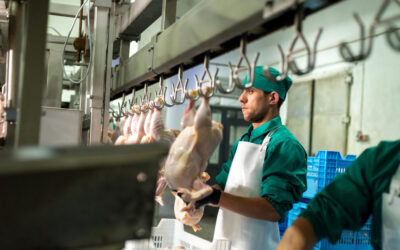
A six-person gap on a packaging line is not a recruiting problem by the time the shift starts. It is a throughput problem, an overtime problem, and potentially a customer-service problem. That is why use managed crews is the right question for plant and warehouse leaders facing recurring labor pressure. The better answer is not simply more names on a roster. It is an accountable workforce system that arrives ready to work, follows the operation’s rules, and keeps the line fully manned.
Traditional temporary staffing can fill openings one person at a time. A managed crew is built to support the production operation as a unit. The provider recruits the workers, handles payroll, delivers orientation and PPE, provides on-site supervision, and stays responsible for keeping attendance, safety, and performance on track.
Why Use Managed Crews Instead of Individual Temps?
Individual temporary workers can be useful for a narrow, short-term need. If one experienced forklift operator is out for two days, an individual placement may be enough. But when an operation needs 15 pick-pack associates, 30 poultry processing workers, or an entire second-shift assembly team, the management burden does not disappear when those workers arrive.
Your supervisors still need to explain the workflow, confirm time punches, watch for safety issues, coach attendance, replace no-shows, and manage workers who may have little connection to the site beyond a single shift. That takes attention away from production schedules, quality checks, maintenance coordination, and output targets.
Managed crews change the accountability structure. Rather than handing a plant manager a group of workers and asking the plant to absorb the rest, the staffing partner provides an organized team with a designated on-site lead or supervisor. That supervisor understands the head-count requirement, shift start, work area, safety expectations, and production priorities. If attendance drops, the crew provider owns the response.
For high-volume operations, that difference matters. A staffing solution should not create another layer of work for your front-line leadership. It should reduce the number of workforce issues that reach them.
Production Uptime Depends on More Than Head Count
A schedule may call for 40 people in deboning, palletizing, kitting, evisceration, or order fulfillment. If only 34 report, the operation can lose more than six positions. Experienced employees may be pulled from other tasks, break schedules become harder to manage, and line speed may be reduced to protect quality and safety.
Managed crews are designed around the operating requirement, not just a job order. The goal is to maintain the agreed head count and replace gaps before they turn into idle equipment or delayed shipments. That means active attendance oversight, rapid backfill capability, and communication with site leadership when volume changes.
This is especially valuable when demand is uneven. Food processing, agribusiness, distribution, and light manufacturing can all experience sharp shifts driven by orders, harvest cycles, promotions, weather, or customer deadlines. Internal recruiting teams often cannot scale at the same speed as production. A managed crew provider can mobilize recruiting, onboarding, and supervision around the immediate need, often integrating workers into established workflows within 48 hours.
Fast deployment only helps if it is organized. Sending unprepared workers to a busy floor can slow the operation down. A disciplined crew model makes sure people understand where to report, what PPE is required, how to clock in, who directs their work, and what safe performance looks like before they are counted on for output.
On-Site Supervision Protects Safety and Quality
Every production floor has its own rules. A warehouse may require specific pedestrian routes and lift-truck separation. A food processing facility may require strict sanitation, temperature-control, and protective-equipment procedures. An assembly operation may have quality checkpoints that cannot be skipped when the line gets busy.
A managed crew gives those requirements a dedicated layer of reinforcement. On-site supervisors conduct safety orientation, confirm PPE use, address attendance and conduct issues, and keep workers aligned with the assigned task. They also provide a clear point of contact between the workforce and the customer’s production leadership.
That does not remove the employer’s site-specific responsibility. The facility still controls its process, production standards, and workplace rules. But it does mean the staffing partner is actively helping enforce the labor side of the operation rather than treating placement as the end of its responsibility.
The result is more than fewer distractions. It supports consistent execution. Workers who receive clear instruction and daily oversight are more likely to follow process, report concerns early, and stay productive throughout the shift. For operations where quality defects, injuries, or sanitation failures carry real cost, that consistency is essential.
Predictable Labor Costs Beat Constant Firefighting
Overtime is often the first response to a staffing shortage. It can protect output for a day or two, but repeated overtime creates expensive habits. Labor costs climb, fatigue increases, supervisors have more schedule conflicts to manage, and burnout can make turnover worse.
Managed crews give operations another lever. By supplying a stable, payroll-inclusive workforce, they help reduce the need to cover every absence with overtime. Pricing is tied to an agreed staffing plan, which makes labor spend easier to forecast than a cycle of emergency recruiting, premium overtime, and missed production.
The financial value is not limited to the hourly rate. Consider the hidden cost of supervisors spending hours each week screening applicants, correcting timecards, chasing absent workers, and handling routine workforce disputes. Consider the cost of slowed lines, late loads, or a production run that has to be rescheduled because the team was short.
A managed model moves much of that administrative load outside the facility’s internal HR and operations structure. Payroll processing, recruiting, workforce oversight, and replacement recruiting are handled as part of the service. Your leaders can stay focused on the work only they can do: run the operation, meet quality standards, and deliver the plan.
Compliance Support Reduces Unnecessary Exposure
High-output employers operate under constant labor, safety, wage, and recordkeeping pressure. Misclassified responsibilities, inconsistent onboarding, incomplete time records, and weak safety orientation can create exposure long after a shift ends.
Managed crews bring discipline to the basics. Workers are recruited and employed through the staffing provider. The provider manages payroll obligations, supports time-clock integration, documents orientation, and supplies the required PPE for assigned work. This creates cleaner processes and clearer responsibility than an informal labor approach.
Zero compliance anxiety is not a realistic promise. Every employer must maintain its own safety culture and follow applicable requirements. But a qualified managed crew partner can materially reduce avoidable risk by making workforce administration, training expectations, and daily oversight more consistent.
This is particularly relevant for multistate employers. A labor strategy that works at one facility can break down when a new site opens, a seasonal operation ramps, or a large customer order requires extra shifts. A provider with a broader deployment capability can apply the same disciplined staffing structure across locations while adapting to each site’s workflow.
When a Managed Crew Is the Best Fit
Managed crews are most effective when labor needs are recurring, sizable, or operationally critical. They fit facilities that need dependable teams for repetitive production work, warehouse tasks, packaging, sanitation support, assembly, and seasonal ramp-ups. They are also a strong option when absenteeism and turnover are consuming management time or when overtime has become the default coverage plan.
They may be less necessary for a single specialized hire or a low-volume office role. The model works best when a group of workers must perform together, under shared standards, to support a measurable output goal.
Before requesting a crew, define the real requirement. Share the needed head count, shift schedule, start date, expected duration, work areas, physical demands, safety requirements, and time-clock process. The clearer the production plan, the faster a workforce partner can build a crew that fits it.
Enterprise Staffing approaches this work as an operational commitment, not a stack of resumes. The objective is simple: provide supervised, OSHA-compliant crews that report ready, fit the workflow, and help keep every line running at full speed.
When the next head-count gap appears, do not wait until the line is already behind. Give your workforce partner the schedule, volume forecast, and staffing target early enough to build coverage before production pays the price.