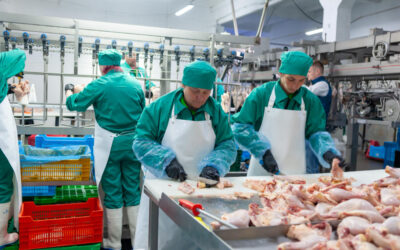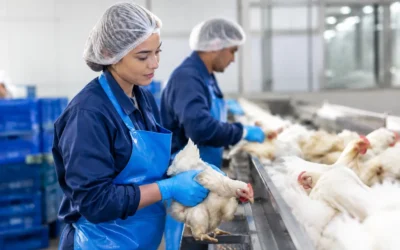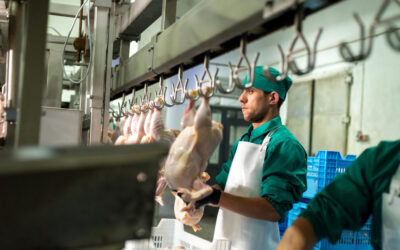
A line does not usually go down because of one dramatic failure. More often, output slips when three workers call out, a new hire is not trained on the station, a changeover runs long, and maintenance discovers a problem after the shift has already fallen behind. By the time the issue reaches the production manager, overtime is rising and orders are at risk. Knowing how to prevent production downtime means treating labor, equipment, safety, and communication as connected operating controls.
For high-output manufacturing, food processing, poultry, warehousing, packaging, and agribusiness operations, uptime is built before the shift starts. The strongest plants do not wait for a staffing gap or equipment problem to become a missed production target. They build response capacity into the daily operation.
How to Prevent Production Downtime Before the Shift Starts
The production schedule should drive the staffing plan, not the other way around. Start each day with a confirmed head count by department, line, shift, and critical task. A total number of employees can look sufficient on paper while one unfilled deboning station, forklift position, pick-pack zone, or palletizing role slows the entire workflow.
Compare scheduled labor against the actual production plan, including expected volume, product mix, changeovers, sanitation requirements, and anticipated absenteeism. A team that can run a standard shift may not be enough for a short-notice customer order or a peak seasonal week. Build the plan around the minimum staffing level required to keep each line moving at target speed, then identify where coverage must be available.
This process works best when operations, maintenance, quality, safety, and workforce leadership review the same shift-ready information. If the production supervisor knows about a maintenance constraint but the staffing coordinator does not, labor may be assigned to a line that cannot run. If a staffing shortage is known early, coverage can be arranged before employees arrive at the gate.
Define critical roles, not just open positions
Not every absence creates the same exposure. A gap at a non-bottleneck task may be manageable for an hour. A gap at a machine operator, line lead, quality checkpoint, forklift driver, or sanitation role can stop output immediately.
Classify positions by their effect on throughput and safety. Each critical role should have a designated backup, documented work instructions, and a clear escalation path when coverage is unavailable. Cross-training is valuable here, but only when employees are trained well enough to protect quality and operate safely. Moving an unprepared employee into a critical station can replace one problem with a safety incident, rework, or rejected product.
Build a Labor Plan That Can Absorb Absences
Absenteeism is an operating reality, especially in physically demanding, shift-based environments. The question is not whether attendance will fluctuate. It is whether your operation has a disciplined way to absorb that fluctuation without breaking the line.
Maintain an on-call coverage model for roles that regularly experience attendance pressure. For some plants, that means a small flex crew trained across packaging, kitting, palletizing, and material handling. For others, it means using a managed workforce partner that can supply supervised crews when demand rises or attendance drops.
The right model depends on the work. A stable, predictable operation may rely more heavily on internal cross-training. A facility with seasonal surges, high turnover, multiple shifts, or difficult-to-fill entry-level roles often needs external coverage capacity as well. The goal is not to overstaff every day. It is to avoid paying far more for emergency overtime, lost output, delayed shipments, and exhausted supervisors when a labor gap appears.
A managed crew model also reduces the amount of plant-floor coordination that falls back on internal leaders. Instead of asking supervisors to recruit, screen, onboard, issue PPE, track attendance, and solve payroll questions while running production, assign clear workforce accountability to a team built for that work. Enterprise Staffing supports this approach with OSHA-compliant, on-site supervised crews that can integrate with established production schedules and time-clock systems quickly.
Keep Safety From Becoming a Throughput Problem
Safety and uptime are not separate priorities. An injury, near miss, blocked aisle, missing PPE requirement, or rushed employee can bring a department to a stop. In food and agricultural environments, poor safety discipline can also compound sanitation and quality risks.
Every worker should receive a site-specific orientation before entering the line. That includes required PPE, emergency procedures, traffic patterns, ergonomics, reporting expectations, lockout/tagout boundaries, food-safety rules where applicable, and the exact scope of the job assignment. Generic orientation is not enough for a worker assigned to evisceration, deboning, machine feeding, loading, or powered industrial equipment support.
Supervision matters just as much as orientation. New workers need visible direction during their first shifts, especially when pace increases. A lead who understands the work area can correct unsafe movement, improper material flow, and missed quality steps before they become downtime events.
Use pre-shift safety checks to confirm that the basics are in place:
- Required PPE is available, sized correctly, and worn at the work area.
- Workstations, walkways, guards, and emergency access points are clear.
- Employees understand their assigned task and escalation contact.
- Equipment issues from the prior shift have been communicated and controlled.
- Forklift, pedestrian, sanitation, and material-flow rules match the day’s layout.
These checks take minutes. Recovering from an avoidable incident can take a shift, a week, or longer.
Coordinate Maintenance With the Production Plan
Preventive maintenance only protects uptime when it is aligned with real production conditions. A maintenance schedule that ignores peak demand, sanitation windows, or changeover requirements may create its own disruption. On the other hand, deferring known issues to protect a single shift can turn a manageable repair into a line-down event later.
Create a shared schedule between operations and maintenance that identifies planned downtime, known equipment risks, parts availability, and the production consequences of each repair. Supervisors should know what equipment is operating with restrictions. Maintenance should know which assets are true bottlenecks and which can be taken offline without reducing output.
Operators are an early-warning system. Encourage them to report unusual vibration, temperature changes, recurring jams, slow cycle times, damaged tooling, and inconsistent material feed immediately. A culture that ignores small problems until a breakdown occurs is expensive. The best plants make it easy to report issues without blaming the person who raises the concern.
Standardize the Handoff Between Shifts
Many downtime events begin during handoff. The incoming crew receives incomplete information, assumes equipment is ready, and discovers an issue only after startup. A short, disciplined handoff prevents that loss of time.
The outgoing lead should document actual output, labor gaps, quality holds, equipment status, material shortages, sanitation status, and work that remains incomplete. The incoming lead should confirm priorities, staffing changes, and any safety or maintenance constraints before production begins.
Keep the handoff practical. It should answer: What is running? What is not running? What is at risk? Who owns the next action? If the answer is buried in a long report or passed through several people, it will not protect the next shift.
Measure the Signals That Predict a Line Stop
Downtime data is useful only when it leads to action. Track the reason codes that reflect what actually interrupts your operation, not a vague category labeled “labor” or “equipment.” Separate unplanned absences from late arrivals, incomplete training, no-call no-shows, machine jams, material shortages, quality holds, and sanitation delays.
Review trends by line, shift, department, supervisor, role, and day of week. If one area repeatedly loses time at startup, investigate the handoff, material staging, equipment warm-up, and crew readiness. If overtime rises every Friday, that may indicate a predictable attendance issue rather than an unavoidable emergency.
Use a small set of operating measures that leaders can act on: fill rate for critical roles, absenteeism rate, time to replace a callout, overtime hours, first-hour output, unplanned downtime minutes, safety observations, and turnover by work area. The point is not to create more reporting. It is to identify where a repeatable control is missing.
Make Response Time Part of the Operating Standard
Even disciplined plants face sudden callouts, volume spikes, transportation disruptions, and equipment surprises. Prevention includes having a response plan for the issues you cannot eliminate.
Set a clear trigger for escalation. For example, a critical role unfilled 90 minutes before shift start should trigger workforce coverage. A line producing below target for two consecutive intervals should trigger a supervisor review. A recurring equipment fault should prompt maintenance assessment before the next shift. Specific triggers prevent teams from waiting too long because everyone assumes someone else is handling the problem.
Your response plan should name the decision-maker, backup contacts, approved staffing source, training requirements, time-clock process, and job-specific PPE needs. When those details are settled in advance, a staffing shortage can be addressed in hours instead of becoming a full-shift loss.
Production uptime is not protected by one policy or one vendor. It is protected by daily discipline: confirmed head counts, trained coverage, safe work areas, maintained equipment, direct shift handoffs, and fast escalation. Put those controls in place before the next gap hits, and your team has a far better chance of keeping every line running at full speed.