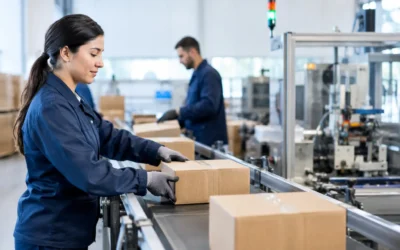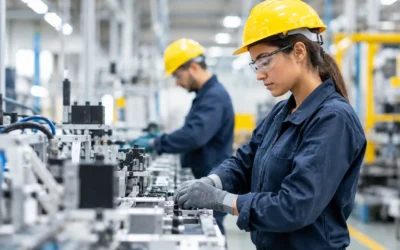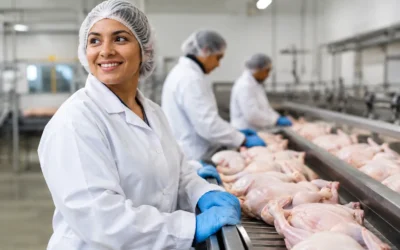
A plant can lose a full day of output from a labor gap that starts with three call-outs at first shift. The best staffing models for plants are built to prevent that chain reaction: uncovered stations, forced overtime, rushed training, safety exposure, and a supervisor pulled away from the floor to find people.
The right model is not simply the one with the lowest hourly bill rate. It is the one that keeps critical workstations manned, gives leaders control over labor cost, and holds up when demand changes without warning. For many high-output operations, that means combining a stable internal team with a workforce partner that can provide supervised, compliant crews when the schedule tightens.
Why Plant Staffing Cannot Be One-Size-Fits-All
A poultry line, a food processing operation, a distribution center, and an assembly plant may all need dependable labor. Their staffing pressure points are different. A facility with predictable production may need a steady crew for packaging, palletizing, sanitation, or kitting. A seasonal agribusiness operation may need to add dozens of workers before harvest volume peaks. A warehouse may need extra pick-pack labor every time a major account runs a promotion.
The staffing structure has to match the work, the production schedule, turnover risk, safety requirements, and the cost of an open position. If one absent deboning employee slows an entire line, that role requires a different coverage plan than a position that can be redistributed for an hour without affecting throughput.
Plant leaders should also separate roles that require plant-specific skill from roles that can be ramped quickly through clear training, supervision, and a consistent safety process. That distinction drives the best use of permanent employees, temporary labor, and managed crews.
The Main Staffing Models for Plants
1. Fully Internal Staffing
With a fully internal model, the plant recruits, hires, trains, schedules, pays, supervises, and manages its entire workforce. This approach gives the employer direct control over every employee relationship and often makes sense for core maintenance personnel, quality leaders, machine operators, lead technicians, and roles with long training curves.
The trade-off is capacity. Internal recruiting teams can struggle to keep up with high-volume openings, overnight shifts, turnover, and short-notice demand increases. Supervisors may end up managing attendance problems and new-hire paperwork instead of managing output, quality, and safety.
This model works best when labor needs are stable and the facility has strong recruiting depth. It becomes expensive when vacancies force regular overtime or production leaders spend their days filling head-count gaps.
2. Traditional Temporary Staffing
A traditional temporary staffing model supplies individual workers as openings arise. It can help when a plant needs a small number of people for basic roles or wants to test a worker before making a direct hire.
The weakness is accountability on the floor. Individual placements may arrive without a crew structure, a dedicated on-site supervisor, or a clear system for replacing call-outs. The plant often inherits much of the day-to-day burden: assigning work, monitoring attendance, reinforcing safety procedures, and finding replacements when staffing levels drop.
For light demand fluctuations, this can be sufficient. For production environments where 20 missing workers can shut down a shift, sending individual candidates is not the same as providing a ready workforce solution.
3. Managed On-Site Crews
A managed crew model is designed for plants that need labor as an operating function, not an occasional recruiting service. The workforce provider recruits and deploys a defined crew, handles payroll administration, supports onboarding and safety orientation, provides required PPE, and places on-site leadership around the team.
This is often one of the best staffing models for plants with repetitive, labor-intensive workflows such as assembly, packaging, inspection, palletizing, evisceration, deboning, hatchery work, sanitation support, and warehouse fulfillment. The crew integrates into the plant’s schedule, production rules, time-clock process, and safety expectations.
The advantage is operational accountability. Instead of asking a shift supervisor to chase attendance, the plant has a designated workforce partner responsible for keeping the agreed head count in place and escalating issues before they affect the line. That can reduce overtime dependency, lower internal HR workload, and create more predictable labor coverage.
A managed crew is not a replacement for plant leadership. The facility still owns production standards, equipment procedures, and daily priorities. But the staffing partner owns the workforce management discipline required to keep the crew ready and fully manned.
4. Seasonal or Surge Staffing
Seasonal staffing adds labor for predictable peaks: harvest periods, holiday shipping, special production runs, customer promotions, or expansion projects. It is built around a known increase in volume and a defined start and end period.
This model works when forecasting is accurate and the plant gives its provider enough lead time to recruit, screen, orient, and stage workers. Waiting until the surge has already started creates a harder problem. The operation may still get people, but training quality, retention, and attendance control are more likely to suffer.
Seasonal staffing should include a ramp plan, not just a head-count number. Define the roles needed by shift, expected productivity, safety requirements, start dates, transportation constraints, and the process for replacing attrition. A surge crew with no replacement plan can disappear as quickly as it arrives.
5. The Hybrid Core-and-Flex Model
For many operations, the strongest answer is a hybrid model. The plant maintains an internal core workforce in essential skilled roles and uses flexible staffing capacity for variable-volume positions. This gives the operation stability where knowledge and technical capability matter most, while adding labor capacity where demand is less predictable.
A packaging plant, for example, may retain its operators, maintenance team, quality personnel, and line leads internally. It may use an on-site crew for packing, labeling, case loading, and palletizing during demand spikes. A distribution operation may keep its inventory control and forklift leadership in-house while adding managed pick-pack crews during peak order volume.
The hybrid approach only works when the boundaries are clear. Everyone needs to know who directs the work, who handles safety reinforcement, how time is captured, which stations flexible crews can fill, and how performance is measured. Ambiguity creates friction. Defined roles create speed.
How to Select the Right Model
Start with the cost of an uncovered station, not the cost of a worker. Calculate the overtime used to cover absences, the lost production caused by slow starts, the supervisor hours spent on staffing issues, and the risk created when inexperienced workers are placed into critical areas. Those numbers usually reveal whether a low-cost staffing option is actually costing the plant more.
Then review your labor pattern. If your head-count need stays within a narrow range all year, internal hiring may be the right foundation. If labor demand rises and falls by shift, season, account volume, or production cycle, flexible capacity is necessary. If the plant repeatedly experiences absenteeism, turnover, or short-notice gaps across multiple departments, a managed crew model may produce better control than a series of individual placements.
Safety and compliance should be part of the decision from the beginning. Labor providers must be able to support OSHA-aligned orientation, job-specific PPE requirements, documented workforce processes, payroll administration, and time-clock integration. In food and agricultural settings, they must also understand the pace, sanitation discipline, and restricted work areas that come with the operation.
Finally, test response speed. A staffing model is only useful if it works when the schedule changes at 4:00 p.m. and the next shift starts at 6:00 a.m. Ask how replacements are handled, who is on-site, how attendance is monitored, and how quickly a crew can be mobilized. Enterprise Staffing builds managed crews around those questions because production continuity cannot wait for a standard recruiting cycle.
Build Staffing Around Production Risk
No plant needs the same workforce structure in every department. The most effective plan protects the stations where labor shortages do the most damage, maintains an internal core where expertise matters, and adds managed capacity where volume changes fast.
When the labor plan is aligned with the production plan, supervisors can focus on run rates, quality, and safe execution instead of trying to fill open positions. That is the standard worth staffing for: every line ready, every shift covered, and no avoidable disruption standing between the plant and its output.