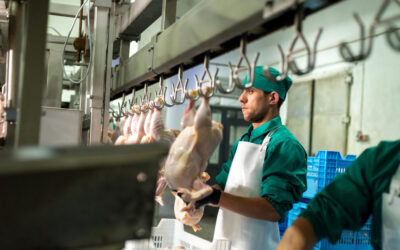
A line does not slow down because a staffing report says it is short. It slows when the packer does not arrive, when a trained operator is pulled to cover another station, or when a supervisor spends the first hour of a shift calling for replacements. Effective assembly line staffing treats labor as a production asset – planned, monitored, and supported with the same discipline as equipment, materials, and maintenance.
For high-output manufacturing, packaging, food processing, poultry, and distribution operations, the goal is not simply filling open jobs. The goal is to keep every line running at full speed with the right head count, safe work practices, and accountable oversight from first shift through final cleanup.
Why Assembly Line Staffing Breaks Down
Most labor gaps begin before a shift starts. Absenteeism rises, turnover creates a training backlog, a large order changes the production plan, or peak-season demand arrives faster than recruiting can respond. By the time the line supervisor sees empty stations, the operation is already making costly choices: approve overtime, reduce line speed, move experienced people out of their positions, or leave output on the floor.
Traditional temporary staffing often adds another layer of work to that problem. Individual workers may be sent to a site, but the plant is still responsible for orientation, attendance follow-up, replacement requests, timekeeping questions, and day-to-day performance management. That approach can work for a small, stable need. It is far less dependable when a facility needs 20, 50, or 100 people across multiple shifts.
The operational cost is larger than the hourly wage. An understaffed line can create missed shipping windows, quality errors, rushed safety decisions, fatigue-related incidents, and higher turnover among the employees who are asked to carry the gap. Assembly staffing must be built around continuity, not last-minute head count.
What a Production-Ready Staffing Model Requires
A reliable staffing plan begins with the workflow. Before a crew arrives, the staffing partner should understand which stations are critical, what pace the line requires, where cross-training is possible, and which tasks demand prior experience or specific personal protective equipment. Kitting, labeling, inspection, palletizing, deboning, evisceration, pick-pack, and material handling do not carry the same physical demands or training requirements.
Head count also needs to reflect the full shift, not only the number of positions at startup. Break coverage, planned absenteeism, sanitation windows, changeovers, and end-of-shift shipping activity all affect whether a line remains fully manned. A plan that looks sufficient on paper can fail at 2:30 p.m. if there is no coverage for a high-volume station.
Supervision Changes the Result
Managed crews perform differently from a collection of individual placements. On-site supervision creates a clear point of accountability for attendance, worker direction, safety reinforcement, issue escalation, and replacements. Supervisors can identify repeated attendance problems early, move qualified workers where they are needed most, and communicate directly with plant leadership before a small disruption affects output.
That does not replace the facility’s production leadership. It supports it. Plant supervisors remain focused on throughput, quality, schedule adherence, and equipment performance instead of spending their shift tracking down missing workers or explaining basic expectations to new arrivals.
Safety and Compliance Cannot Be Added Later
Fast deployment does not mean skipping controls. Assembly line staffing requires safety orientation that matches the worksite, task-appropriate PPE, documented expectations, and clear reporting paths for incidents or hazards. In food and poultry environments, that may also include sanitation rules, cold-environment requirements, knife safety, and strict hygiene protocols. In manufacturing and warehousing, it may involve lockout awareness, forklift traffic, ergonomic lifting practices, machine guarding, and conveyor hazards.
Compliance work matters just as much behind the scenes. Payroll, workers’ compensation, employment documentation, time-clock integration, and workforce records can create administrative exposure when they are handled inconsistently. A staffing program should reduce that burden and give operations leaders zero compliance anxiety, not create more paperwork for HR.
Build Staffing Around Production Demand
The best assembly line staffing plans are flexible without being vague. Operations leaders should share production forecasts, expected volume increases, shift patterns, and known seasonal events early enough for recruiting and workforce preparation to keep pace. A staffing partner cannot protect uptime if it only learns about a demand spike after the schedule is posted.
At the same time, forecasts are not always perfect. A delayed shipment, a new customer order, or a surge in retail demand may require labor within days, not weeks. That is where a provider with established recruiting capacity, ready work crews, and field leadership can make a measurable difference. Enterprise Staffing can integrate managed crews into production workflows within 48 hours when the operation has an urgent head-count gap and the work scope is clearly defined.
The critical distinction is between speed and disorder. Rapid staffing works when deployment follows a practical sequence: confirm the positions and shift schedule, prepare workers for site-specific rules, align timekeeping and reporting, then place supervision on the floor. Skipping those steps may get people through the door faster, but it often increases early attrition and puts pressure back on the plant.
Measure More Than Fill Rate
A filled requisition is not the same as a stable line. Operations leaders need staffing metrics that show whether labor is actually supporting output. Attendance by shift, show rate, replacement response time, overtime hours, turnover, safety observations, and production throughput should all be part of the conversation.
A few indicators are especially useful when evaluating a staffing program:
- Start-of-shift fill rate shows whether every planned station has coverage when production begins.
- Attendance consistency identifies whether recurring callouts are creating hidden overtime and supervisor workload.
- Time-to-replacement shows how quickly a labor gap is contained before it affects line speed.
- Overtime trends reveal whether contingent labor is reducing fatigue and premium-pay exposure.
- Safety and quality observations show whether workers are prepared for the work instead of merely present for it.
These measurements need context. A facility launching a new line may accept a short learning curve. A mature, high-speed packaging operation may require near-immediate productivity. The right benchmark depends on the task, training time, production target, and consequence of downtime.
Avoid the Common Staffing Mistakes
One common mistake is treating every position as interchangeable. A worker who succeeds at palletizing may not be ready for a detail-sensitive inspection station. Another is staffing to average demand while ignoring peak hours, weekend production, and break coverage. The line may look adequately staffed until the exact period when volume is highest.
Facilities also lose control when responsibility is unclear. If the staffing provider recruits workers but no one owns attendance management, safety follow-up, or replacement coordination, plant supervisors become the default solution. That defeats the purpose of outsourcing labor support.
Finally, do not wait for a severe shortage to establish a staffing relationship. A provider can respond faster when it already understands the facility layout, shift structure, safety requirements, time-clock process, and production roles. Planning before the emergency gives the operation more choices when demand changes.
Keep the Line Ready for the Next Shift
Assembly line staffing is most effective when it operates as part of the production plan, not as an emergency purchase order. A managed, supervised crew gives plant leaders a practical way to absorb absences, scale for volume, control overtime, and keep safety expectations consistent without expanding internal HR workload.
When the next schedule exposes a head-count gap, start with the line: identify the stations that cannot go empty, the shift that carries the highest risk, and the number of trained people required to protect output. A clear staffing plan built around those facts keeps the next shift ready to run.