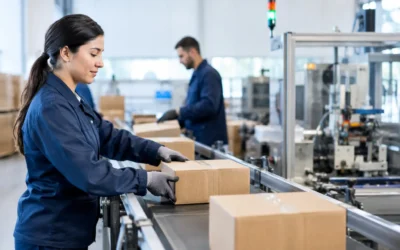
A short-staffed packaging line does not create a small problem. It creates missed pallet counts, rushed changeovers, overtime that compounds by the shift, and supervisors pulled away from quality and safety. The manufacturing labor trends affecting U.S. plants are most visible at that point: when a head-count gap turns into lost output.
For operations leaders, the issue is no longer simply finding applicants. It is building a labor plan that holds up through absenteeism, seasonal volume, turnover, stricter compliance requirements, and changing production schedules. Plants that treat labor as a managed production asset are better positioned to keep every line running at full speed.
Manufacturing Labor Trends Moving From HR to Operations
Labor planning has become an operational responsibility because its impact reaches far beyond recruiting. A plant can have equipment, raw materials, customer orders, and a production schedule ready to go. Without trained people at the workstations, none of it converts into finished product.
The most significant shift is the move from predictable staffing levels to variable demand. Food processing, poultry, assembly, packaging, distribution, and agribusiness operations often need more hands with little notice. A large order, a seasonal ramp, an unexpected absence pattern, or a second-shift expansion can change required head count in a single day.
That volatility exposes the limits of a reactive hiring model. Posting jobs, screening individual applicants, completing onboarding, and waiting for start dates may work for a long-term replacement. It rarely solves a production problem that needs coverage this week. Operations leaders need access to workforce capacity that can be deployed, supervised, and integrated into the floor quickly.
Attendance Reliability Is Now a Capacity Issue
Turnover remains costly, but attendance instability can be even more disruptive. A team may look fully staffed on paper and still fall short at the start of shift. When callouts increase, remaining workers are asked to cover unfamiliar stations, breaks are compressed, and supervisors spend the day filling gaps instead of managing throughput.
The answer is not always adding permanent head count. In some facilities, a stable core workforce supported by flexible, supervised crews provides better protection against daily variation. The right mix depends on order volatility, training requirements, seasonality, and how quickly employees can become productive in a specific role.
For repetitive production work such as labeling, kitting, pick-pack, palletizing, deboning, trimming, or basic assembly, cross-trained labor pools can provide practical coverage. For highly technical roles or positions with long qualification periods, plants still need a stronger internal retention strategy. The key is identifying which jobs need permanent depth and which need scalable capacity.
Wage Pressure Has Not Eliminated the Cost of Empty Positions
Higher hourly pay can help attract candidates, but wage increases alone do not solve labor availability. Workers also weigh shift consistency, transportation, safety conditions, workload, supervisor quality, and whether the job can reliably provide enough hours. A higher rate that does not improve the day-to-day work experience may only accelerate competition between nearby employers.
Operations teams should also compare wage decisions against the full cost of labor disruption. Overtime premiums, missed production targets, expedited freight, excessive scrap, quality rework, and supervisor burnout can quickly outweigh the cost of a well-managed supplemental crew. The lowest bill rate is not automatically the lowest labor cost if it produces turnover, gaps, or preventable downtime.
Safety and Compliance Are Part of the Staffing Plan
As labor supply tightens, some employers feel pressure to place people on the floor before they are prepared. That approach creates risk. New workers who do not understand lockout procedures, PPE requirements, sanitation rules, forklift separation, chemical handling, or emergency protocols can put themselves and the entire operation at risk.
A productive staffing model starts before the first shift. Workers need role-specific safety orientation, clear reporting expectations, correct PPE, and a supervisor who understands the workflow. Time-clock integration matters as well. Accurate hours, schedule visibility, and documented attendance are not administrative details when labor costs and compliance exposure are under scrutiny.
For multistate employers, the compliance burden becomes more complex. Payroll practices, employment documentation, injury reporting, meal and rest rules, and local hiring conditions can vary by location. Centralized workforce oversight helps maintain discipline, especially when a plant is scaling quickly or opening a new shift.
This is where managed labor differs from simply receiving a list of candidates. A managed crew model brings accountability to deployment, attendance follow-up, orientation, on-site direction, and workforce performance. The staffing partner should own its part of the result, not disappear after workers arrive at the gate.
Automation Is Changing Jobs, Not Removing the Need for Crews
Automation is another major force in manufacturing labor trends, but its effect varies widely by facility. Automated equipment can reduce repetitive handling, improve consistency, and relieve workers from physically demanding tasks. It can also create new needs for machine operators, material handlers, sanitation teams, quality inspectors, maintenance support, and workers who can manage exceptions when the process does not run as planned.
In many plants, automation increases the value of dependable entry-level labor rather than replacing it entirely. A case packer still needs product supplied. A conveyor system still needs people at inspection points. Automated storage and retrieval systems still require organized receiving, replenishment, and shipping workflows.
The operational question is not whether to automate or staff. It is how to align labor with the work that remains human-dependent. Before changing head count, map the actual workflow: where material waits, where operators leave stations to solve problems, where bottlenecks form, and where skilled workers spend time on tasks that can be reassigned. That assessment often reveals opportunities to protect output without adding permanent overhead.
What Strong Labor Planning Looks Like on the Plant Floor
Effective plants plan labor by station, shift, and production volume, not by a single monthly head-count target. They know the minimum staffing needed to operate safely, the ideal staffing needed to reach schedule, and the contingency coverage required when demand rises or attendance drops.
Start with the work that stops the line. Identify critical positions where one absence creates a bottleneck, such as feeder roles, packaging stations, forklift support, quality checks, or sanitation handoffs. Then determine whether those roles require cross-training, a backup roster, or supplemental coverage ready to deploy.
Next, measure labor performance with production measures that matter. Track attendance fill rate, time to fill open shifts, overtime hours, turnover by department, labor hours per unit, training completion, and incident trends. Those measures show whether labor is supporting throughput or quietly working against it.
Finally, establish a clear escalation process. When a supervisor sees a projected gap, there should be a defined point of contact, required head count, shift start time, job description, PPE needs, and time-clock process. Delays usually happen because the request is vague or approval moves through too many layers. A disciplined request process shortens the distance between a problem identified and a crew deployed.
Build Flexibility Without Losing Control
Flexible labor should not mean loose labor controls. The strongest operations maintain the same expectations for every person on the floor: safety compliance, station accountability, attendance discipline, production standards, and respectful supervision. Contingent workers should fit the plant’s schedule and process, not force the process to adjust around them.
That requires an on-site management structure. Someone must verify who arrived, who is trained, where each worker is assigned, how breaks are covered, and whether the crew is meeting the shift plan. When an issue arises, it should be addressed immediately, before it becomes a quality failure or a missed truck departure.
Enterprise Staffing supports this model with OSHA-conscious, supervised crews built for labor-intensive production environments. The goal is not to add bodies to a roster. It is to provide accountable workforce coverage that reduces pressure on plant leadership while protecting output.
The most useful next step is simple: review the last four weeks of missed production, overtime, and attendance gaps by shift. The pattern will show where your labor plan is exposed. Fixing the highest-impact gap first can protect far more output than another round of broad recruiting.