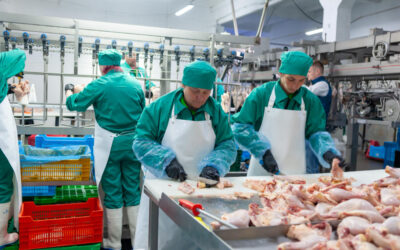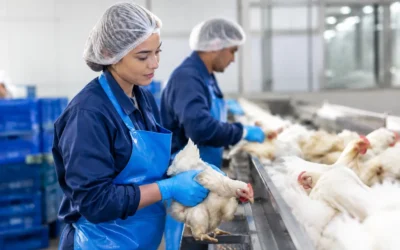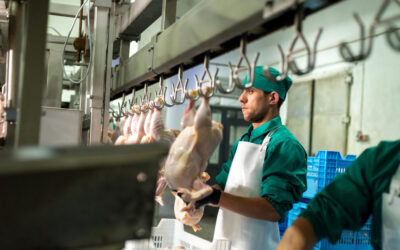
A line does not slow down because a requisition is still open. It slows down because three people missed second shift, two new hires did not return after orientation, and the remaining crew is already deep into overtime. That is when should plants outsource hiring becomes an operations question, not just an HR question.
For high-output manufacturers, warehouses, food processors, poultry operations, and agribusiness facilities, labor is a production asset. When head count drops below what the schedule requires, the impact shows up quickly: missed cases per hour, delayed loads, unsafe workarounds, supervisor fatigue, and overtime that keeps climbing without solving the underlying shortage.
Outsourcing hiring is not the right answer for every open position. But when labor gaps threaten throughput, a managed staffing partner can restore control faster than an internal recruiting process built for normal conditions.
When Should Plants Outsource Hiring?
Plants should consider outsourcing hiring when the internal team can no longer fill roles at the speed, volume, or consistency the operation needs. The trigger is rarely one hard-to-fill opening. It is a recurring pattern where staffing instability begins to affect production commitments.
A plant may be able to recruit effectively during steady periods with predictable turnover. The calculation changes when demand increases, absenteeism rises, a new line starts, or a customer order creates an immediate production surge. At that point, the cost of leaving the work uncovered can exceed the cost of bringing in outside labor support.
The strongest indicator is simple: if supervisors are spending more time chasing attendance and moving people between stations than managing quality, safety, and output, the labor model needs help.
Your overtime is covering a permanent shortage
Overtime is useful as a short-term tool. It becomes expensive when it is the standing plan for keeping every shift fully manned. Regular overtime drives labor costs higher, increases fatigue, and can eventually create more attendance and turnover problems.
If the same employees are carrying extra hours week after week because open roles cannot be filled, outsourcing hiring can provide a more stable alternative. A managed crew gives the operation scheduled coverage without forcing supervisors to rebuild the shift at the last minute.
This does not mean overtime should disappear completely. Maintenance events, rush orders, and seasonal peaks still require flexibility. The goal is to stop using premium hours to cover a staffing gap that has become normal.
Turnover and no-shows are disrupting the line
High-turnover roles require more than a steady flow of applicants. They require recruiting, screening, orientation, safety instruction, attendance follow-up, replacement coverage, and ongoing supervision. If those responsibilities stay on the plant floor, production leaders inherit an HR workload they were never staffed to carry.
This is especially common in repetitive, physically demanding environments such as packaging, palletizing, pick-pack, assembly, deboning, evisceration, sanitation support, and cold-storage operations. A candidate may accept the job but decide after the first shift that the work is not a fit. The plant still needs the station covered the next day.
An outsourced model is most valuable when it includes accountability beyond candidate placement. The provider should recruit for the actual work, orient workers to site requirements, monitor attendance, replace gaps, and maintain an on-site point of contact. Sending names is not the same as keeping a production crew staffed.
A seasonal ramp or demand spike is approaching
Seasonality exposes the limits of a recruiting process designed around average demand. Harvest periods, holiday distribution volume, promotional runs, customer expansions, and new contracts can create a head-count need that must be met within days or weeks, not months.
Plants should not wait until the first shift is short to begin evaluating outside support. When a demand ramp is visible on the schedule, the better move is to forecast required head count by department, shift, start date, and skill level. That gives a staffing partner time to build a crew around the real production plan.
The same applies to launches and transitions. A new packaging line, additional warehouse shift, or expanded processing capacity requires labor to be in place before equipment reaches full speed. If staffing arrives after the launch date, the operation starts behind.
The Operational Signals That Call for Outside Support
Outsourcing hiring is often justified before a plant reaches crisis level. Watch for these operational signals:
- Supervisors are routinely pulled from production management to recruit, call no-shows, or complete onboarding paperwork.
- Open positions remain unfilled long enough to delay schedules, reduce line speed, or force departments to borrow employees from one another.
- Absenteeism, turnover, and overtime are creating unpredictable labor costs from week to week.
- The plant needs a sizable number of workers for a new shift, urgent order, seasonal surge, or recovery from unexpected attrition.
- Safety orientation, PPE distribution, payroll administration, and time-clock coordination are consuming more internal capacity than the HR team can sustain.
None of these signals alone automatically means a plant must outsource. A brief absence spike may resolve with better attendance management. A small, specialized maintenance role may require a direct-hire search rather than contract labor. The case becomes clear when the issue is broad, recurring, and directly tied to frontline production coverage.
What to Outsource and What to Keep In-House
The best workforce model is often blended. Plants commonly keep strategic, technical, and leadership roles under direct internal hiring while outsourcing high-volume production labor that fluctuates with output requirements.
Direct hiring may make more sense for plant managers, engineers, maintenance specialists, quality leaders, highly skilled machine operators, and roles where long-term institutional knowledge is central to the job. Those positions usually justify a longer search and a deeper internal selection process.
Outsourced hiring is often a better fit for scalable production and logistics functions: assembly, packaging, kitting, labeling, sorting, palletizing, material handling, warehouse support, sanitation support, and other roles that need reliable shift coverage at volume. In food and poultry environments, it can also support process-specific crews when workers receive appropriate site orientation, PPE, and safety oversight.
The key is to match the model to the work. If a role is tied to daily throughput and must be staffed consistently to keep the line moving, it should be evaluated as an operational coverage need, not only as an open requisition.
Why Managed Crews Matter More Than Candidate Volume
A plant can receive dozens of applicants and still be short staffed. Candidate volume does not guarantee attendance, readiness, safety compliance, or productivity after workers enter the facility.
That is why operations leaders should look beyond a traditional temporary staffing transaction. The more useful model is a managed crew with a provider that takes responsibility for recruiting, onboarding coordination, supervision, attendance management, payroll, and replacement coverage.
A managed approach also creates clearer accountability. The plant defines the shift, workflow, expected output, safety requirements, and head-count need. The workforce partner builds and supports the crew around those requirements. Time-clock integration, reporting, and on-site communication help both sides identify problems before they become line stoppages.
For a warehouse, that may mean workers are assigned around receiving, replenishment, pick-pack, and palletizing priorities. For a processing operation, it may mean the crew is organized around the stations that protect daily yield and shipping commitments. The staffing plan should follow the workflow, not force the workflow to adapt to random labor availability.
Compliance and Safety Are Part of the Hiring Decision
Outsourcing hiring can reduce internal burden, but only if the provider treats compliance and safety as part of deployment. Labor-intensive facilities face real exposure when orientation is inconsistent, PPE is not managed, payroll processes are unclear, or workers are placed without understanding site rules.
Before bringing in outside support, plant leaders should define who owns each part of the process: site-specific safety orientation, job hazard communication, PPE requirements, timekeeping, injury reporting, shift supervision, attendance escalation, and documentation. A vague handoff creates compliance anxiety and leaves supervisors solving problems after the fact.
The right partner works within the plant’s existing rules while maintaining workforce oversight. That is particularly important in OSHA-sensitive environments, food processing facilities, cold environments, and operations with strict sanitation, quality, or access-control requirements.
How to Decide Before the Gap Gets Worse
Start with the production schedule, not the recruiting dashboard. Calculate the number of workers required by shift and department to meet planned output. Then compare that requirement with actual daily attendance, expected attrition, overtime hours, and supervisor time spent covering labor issues.
If the difference persists across multiple weeks, the plant has a capacity problem. Waiting for internal hiring to catch up may be reasonable if demand is declining or the gap is limited to a few specialized jobs. If volume is rising and the shortage affects core stations, act sooner.
Give a staffing partner a clear operating picture: required head count, shift times, start date, job tasks, physical demands, production environment, safety requirements, expected duration, and time-clock process. Clear information produces a staffing plan that is built for the floor instead of a generic batch of applicants.
Enterprise Staffing approaches this work as operational continuity: crews must be ready to enter the workflow, follow site standards, and help keep output stable. The objective is not simply to fill seats. It is to keep every line running at full speed without shifting the labor-management burden back onto plant leadership.
The practical next step is to identify the first shift or department where a head-count gap would put tomorrow’s production at risk. Build the staffing plan around that exposure now, while there is still time to protect the schedule.