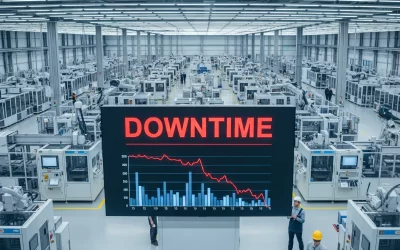
A single gap on the production line can halt output, trigger overtime and erode profit. Most plants plug those gaps with two models:
- Traditional temp agencies that recruit off-site and dispatch workers on demand.
- On-site (vendor-on-premise) staffing programs, where a provider stations recruiters and supervisors inside your facility.
Which model keeps your line running—and your costs under control? Let’s break down the facts.
Temp Agency Model: Fast Access, Slow Reaction
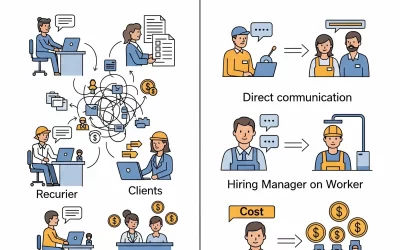
Traditional temp agencies excel at filling generic roles quickly, but they operate from a distant branch. Recruiters aren’t embedded in daily operations, so when a worker no-shows at 5 a.m., response time depends on call lists and driving distance. Downtime and mandatory overtime often become the backup plan. Industry data shows manufacturers lean on overtime “to keep operations running smoothly,” but that strategy “can have a dramatic, negative impact over time.”aerotek.com
Common pain points
- Longer time-to-replace when shifts start early.
- Minimal insight into real-time head-count needs.
HR still owns training, payroll and safety paperwork.
On-Site Staffing: A Crew That Lives Inside Your Operation
In an on-site (vendor-on-premise) model, the staffing provider places a manager or entire team inside the plant. They forecast labor needs daily, onboard replacements in minutes and shoulder compliance tasks—all while running payroll on their books.
According to Sure-Staff’s VOP guide, companies adopt on-site programs because managers “continuously monitor your staffing needs to proactively fill positions and avoid downtime.”
Recent research adds that embedded recruiters “respond to urgent staffing gaps, quickly onboard last-minute replacements, and continuously evaluate hiring priorities,” making them ideal for high-volume operations.
Side-by-Side Comparison
| Criteria | Temp Agency | On-Site Staffing Program |
| Response to no-show | Calls branch; ETA 2–4 h | Recruits on-site; coverage in minutes |
| Overtime reliance | High during demand spikes | 30 % average overtime reduction reported |
| Downtime risk | Higher—gaps escalate quickly | Lower—real-time adjustments |
| Payroll & HR burden | Stays with your HR team | Provider handles payroll, taxes, E-Verify |
| Safety & OSHA training | Basic orientation off-site | Daily audits, PPE checks on the floor |
Cost Impact: The Hidden Price of Overtime
A 10-minute production stop can cost thousands in scrap or late fees. When downtime triggers overtime, labor costs balloon further. Aerotek calculates that contingent labor “mitigates the impact that rapid growth can have on overtime expense.”
A case study from Anserteam adds that on-site managers “assess staffing needs daily—if not hourly—… to avoid down time.”
Rule of thumb: If overtime exceeds 10 % of total labor hours, an on-site program typically pays for itself within a quarter.
Compliance & Safety: One Less Audit to Fear
OSHA citations, E-Verify errors and I-9 fines hit harder when labor records scatter across multiple vendors. On-site programs centralize documentation:
- Daily PPE and safety huddles led by vendor supervisors.
- Single point of contact for wage-and-hour audits.
- Consistent incident reporting that meets OSHA logs.
Regal Staffing notes that on-site workforce management “reduces downtime and enhances worker productivity” while providing real-time staffing modifications to optimize labor expenditures.
When a Temp Agency Still Makes Sense
Temp branches shine for:
- Office or one-off professional roles where head-count is low and urgency is moderate.
- Short seasonal peaks (< 1 week) when paying a setup fee for an on-site manager may not be economical.
Geographies with sparse labor pools where remote recruiting outperforms local walk-ins.
Choosing the Best Model for Your Plant
Ask these questions:
- How much does overtime currently add to weekly labor cost?
- What is your average unplanned downtime per month?
- Does HR spend > 20 % of its time on payroll and onboarding tasks?
- Are OSHA or USDA audits frequent in your industry?
If those metrics hurt profitability, an on-site solution is likely to deliver positive ROI in under 90 days.
Enterprise Staffing’s 48-Hour Crew Deployment
Our on-site programs place supervisors, recruiters and pay-rolled crews inside your plant within 48 hours. Benefits include:
- Guaranteed head-count coverage—no-show replacements in minutes.
- Payroll, taxes and insurance handled on our books.
- Overtime savings that average 25–35 % in the first month.
Real-time KPI dashboard tracking fill rate, labor cost and safety metrics.
Conclusion
Downtime, overtime and compliance headaches are symptoms of a staffing model designed for yesterday’s economy. An on-site contract-labor program delivers the speed, accountability and cost control today’s high-output plants demand.
Ready to see the numbers? Schedule a free staffing audit and discover how quickly Enterprise Staffing can turn labor volatility into production uptime.